ORCHID GUIDE LAB
About Orchid Guide Lab
Orchid Guide Lab is an informational project about orchids, created for people who want to understand their plants better, care for them properly, and find reliable information about species, hybrids, roots, flowering and common problems.
OUR MISSION
Make orchid information clear and practical
Orchids are extremely diverse. What works well for Phalaenopsis does not always work for Cattleya, Dendrobium, Vanda, Paphiopedilum or other genera.
That is why we do not reduce orchid care to a few universal tips. Our content considers the needs of the specific plant group, growing method, root condition, substrate, light and other important factors.
A practical guide, not just a collection of keywords
We create pages when they can provide a distinct useful answer or help readers better understand a particular orchid or problem.
WHAT YOU'LL FIND
Main areas of Orchid Guide Lab
Orchid Catalog
Genera, botanical species, registered hybrids and individual cultivars when reliable information is available.
Care
Watering, light, substrate, pots, repotting, fertilizing, temperature, humidity and flowering.
Practical Tips
Guides to yellow or soft leaves, rotting roots, bud drop, flowering problems and orchid recovery.
OUR APPROACH
How we create our content
We do not invent traits
If there is not enough reliable information about origin, fragrance, parentage, flower size or other traits, we do not add them simply to fill a page.
We verify names
For botanical species, synonyms and hybrids, we use current botanical and registration sources.
We distinguish different types of names
A botanical species, registered hybrid, trade name and cultivar are not the same thing. We aim to make those distinctions clear.
We write for people
The main goal of each page is to help readers find an answer and understand what is happening with a plant, not simply repeat a search phrase many times.
We consider context
An orchid's condition rarely depends on a single symptom. Roots, substrate, watering, temperature, light and season can all matter.
We update information
If an accepted botanical name changes or more accurate information becomes available, our content may be reviewed and updated.
TAXONOMY
Why orchid names matter to us
In the orchid world, you may encounter old botanical names, currently accepted names, hybrid names, trade names and names of individual clones.
An older name may remain popular among collectors and in search results even after the taxonomy changes. In such cases, we may mention it as a synonym or widely used historical name while also showing the currently accepted name.
You can read more about how we verify information and sources in our editorial policy .
PRACTICAL PHOTOGRAPHY
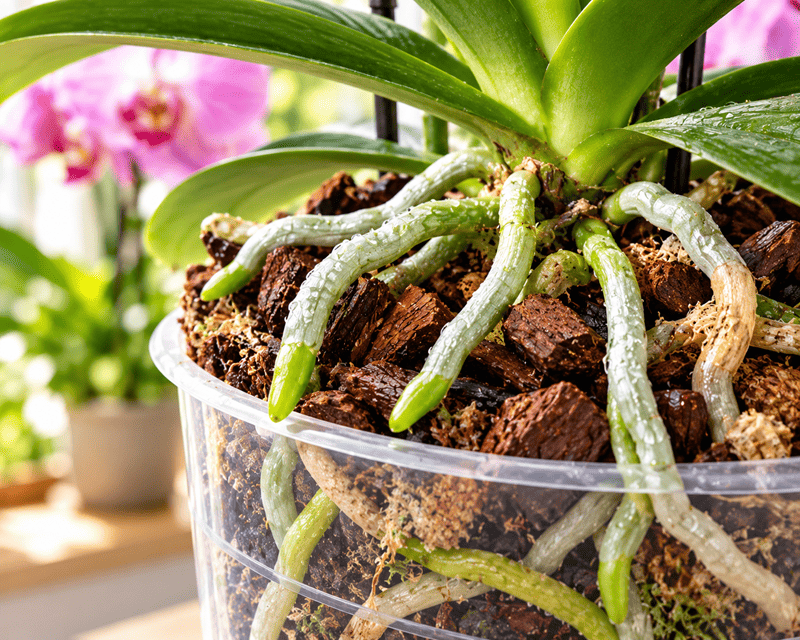
Images should help explain the subject
We use photographs not only as decoration. They should show specific details such as root condition, substrate, leaves, watering technique, repotting or another action discussed in the article.
On individual orchid pages, photographs help show the plant's overall appearance, flower shape and other visible features without adding unverified traits.
LANGUAGE VERSIONS
Ukrainian and English versions of Orchid Guide Lab
Orchid Guide Lab is available in Ukrainian and English. The Ukrainian version remains the primary source for the project's original content.
English pages are published in the separate /en/ section so both language versions have a clear structure and can develop in parallel.
FEEDBACK
Found an error or have a question?
If you notice a possible error in an orchid name, trait or other information, you can let us know through the contact page.