What is Phalaenopsis formosana?
Phalaenopsis formosana (Christenson) J.M.H.Shaw is an accepted botanical species in the family Orchidaceae.
The current combination was published in 2021. Its basionym is Phalaenopsis aphrodite subsp. formosana Christenson , published in 2001.
In the current Kew classification, the taxon is accepted at species rank.
Flowers
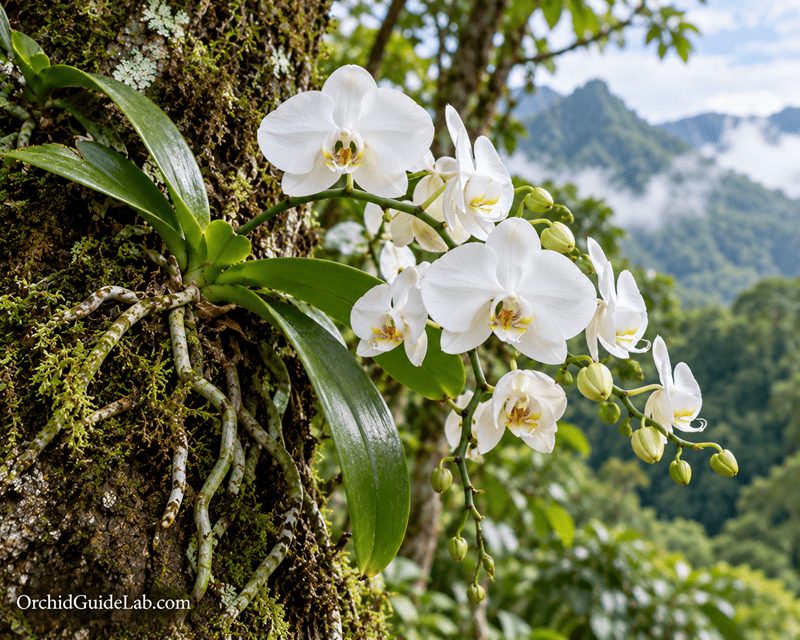
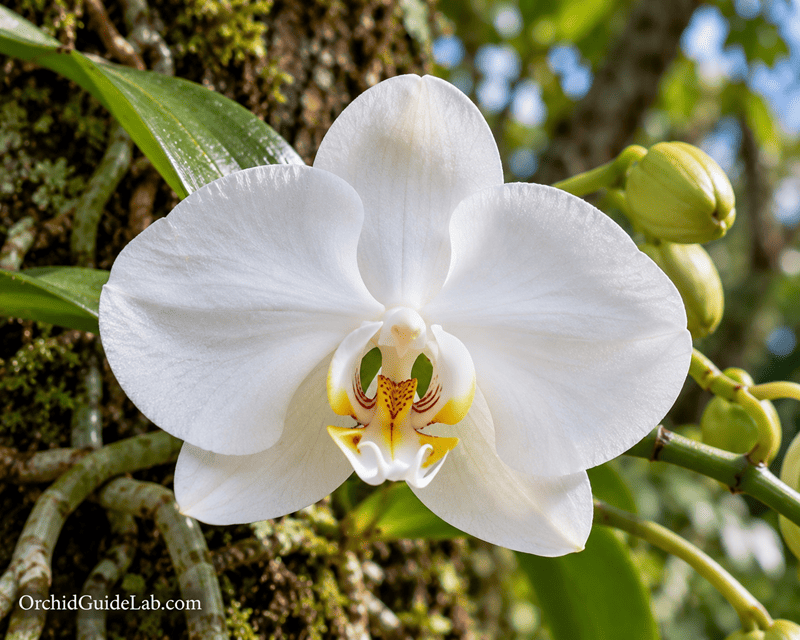
Phalaenopsis formosana produces predominantly white, broad and rounded flowers.
The lip contrasts with the white petals and sepals, showing yellow together with pink to reddish markings in the central area.
The Taiwanese taxon was historically distinguished from typical Phalaenopsis aphrodite by a combination of floral, inflorescence and vegetative characters.
Inflorescence
One of the characteristic features of Phalaenopsis formosana is its strongly branching inflorescence.
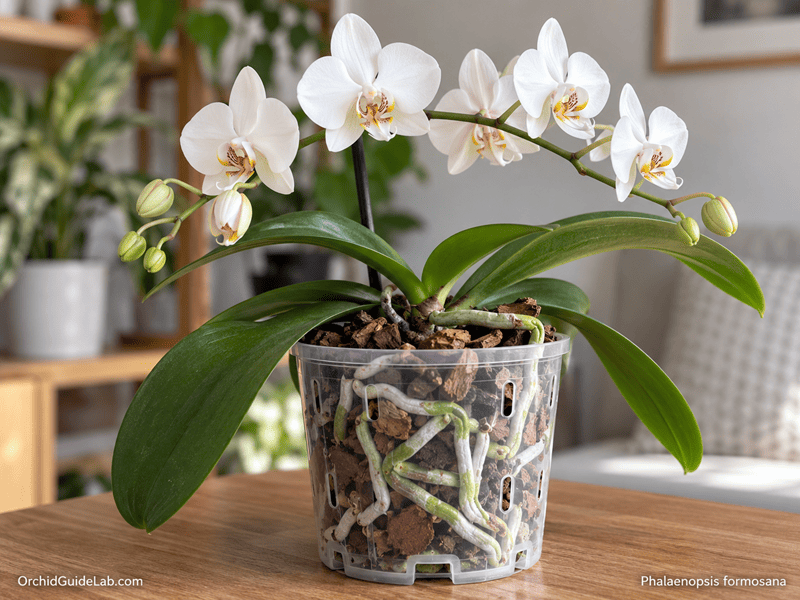
Mature plants can develop multiple lateral branches carrying numerous white flowers and buds.
Leaves
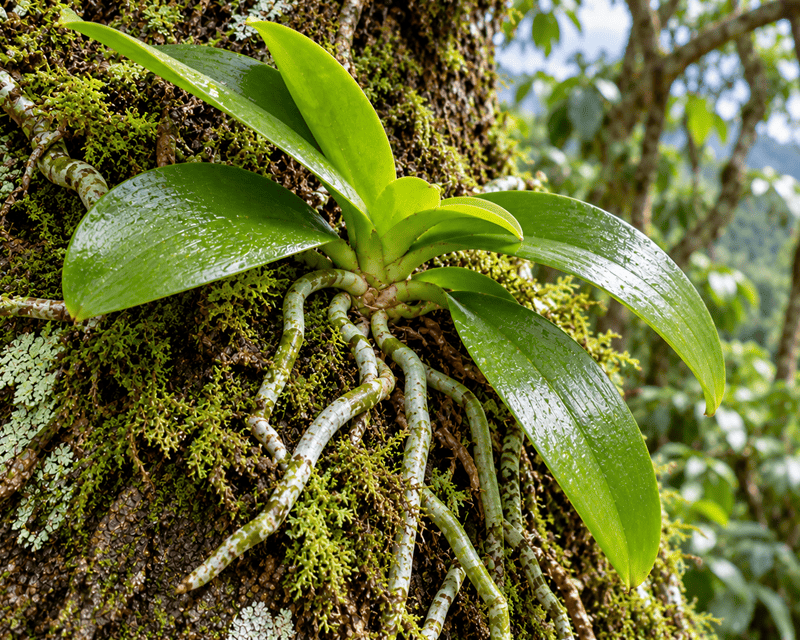
The leaves are green, firm and fleshy. Historical descriptions of the Taiwanese taxon note an apple-green coloration without pronounced red pigmentation.
As an epiphyte, the species develops thick aerial roots that attach naturally to tree bark.
Natural Range
The natural range of Phalaenopsis formosana is associated with southeastern Taiwan and nearby islands.
It is an epiphyte of humid tropical environments, growing on trees with well-aerated roots.
Phalaenopsis formosana Photos

Phalaenopsis formosana Video
Watch Phalaenopsis formosana in bloom: white flowers, yellow and pink-red lip details, branching flower spikes, buds and green foliage.
Synonymy and Name History
The currently accepted name is Phalaenopsis formosana (Christenson) J.M.H.Shaw .
Historically associated names include:
- Phalaenopsis aphrodite subsp. formosana Christenson ;
- Phalaenopsis aphrodite var. formosana (Christenson) O.Gruss .
Growing
For indoor cultivation, Phalaenopsis formosana can be grown in a transparent ventilated orchid pot with an airy bark-based medium.
The roots should not remain continuously wet in compacted substrate. Allow the bark to dry partially between waterings.
Provide bright, diffused light while avoiding prolonged harsh midday sun.
Higher humidity should be combined with consistent air movement.
Important: Phalaenopsis formosana was historically treated within Phalaenopsis aphrodite, but current Kew taxonomy accepts it as a separate species.