ORCHID CATALOG
Phalaenopsis (Phalaenopsis)
A catalog of botanical species, registered hybrids and cultivars of Phalaenopsis. This page brings together verified names and resources about one of the best-known orchid genera in cultivation.
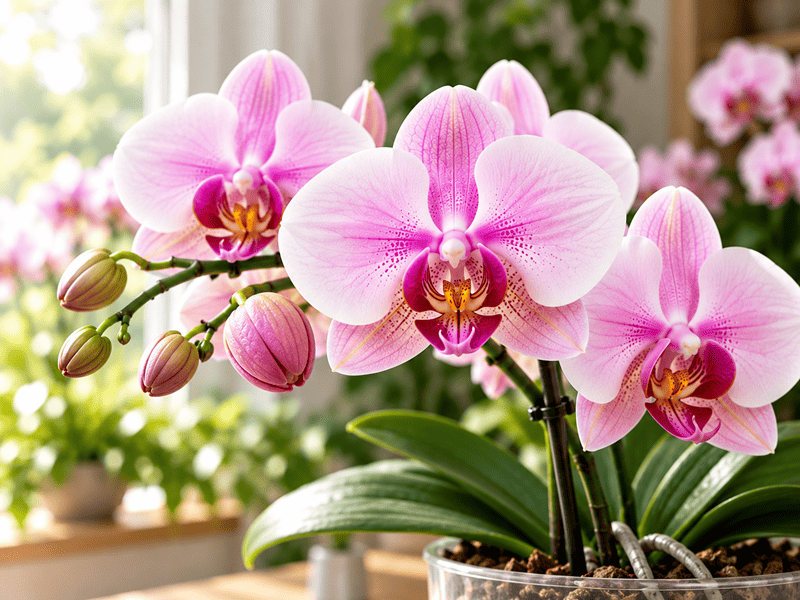
ABOUT THE GENUS
What is Phalaenopsis?
Phalaenopsis is an accepted botanical genus in the family Orchidaceae. The genus name was published by Carl Ludwig Blume in 1825.
The natural range of the genus extends from tropical and subtropical Asia to northeastern Australia. Many species are epiphytic, although the genus also includes species with different ecological adaptations.
In cultivation, both botanical species and numerous hybrids are widely grown. For that reason, the Orchid Guide Lab catalog distinguishes natural species, registered hybrids and named cultivars.
BOTANICAL SPECIES
Phalaenopsis Species
Phalaenopsis amabilis
Accepted botanical species of the genus Phalaenopsis.
Open page →Botanical speciesPhalaenopsis amboinensis
Accepted botanical species of the genus Phalaenopsis.
Open page →Botanical speciesPhalaenopsis aphrodite
Accepted botanical species of the genus Phalaenopsis.
Open page →Botanical speciesPhalaenopsis appendiculata
Accepted botanical species of the genus Phalaenopsis.
Open page →Botanical speciesPhalaenopsis bastianii
Accepted botanical species of the genus Phalaenopsis.
Open page →Botanical speciesPhalaenopsis bellina
Accepted botanical species of the genus Phalaenopsis.
Open page →Botanical speciesPhalaenopsis boulbetii
Accepted botanical species of the genus Phalaenopsis.
Open page →Botanical speciesPhalaenopsis braceana
Accepted botanical species of the genus Phalaenopsis.
Open page →Botanical speciesPhalaenopsis cacharensis
Accepted botanical species of the genus Phalaenopsis.
Open page →Botanical speciesPhalaenopsis celebensis
Accepted botanical species of the genus Phalaenopsis.
Open page →Botanical speciesPhalaenopsis chibae
Accepted botanical species of the genus Phalaenopsis.
Open page →Botanical speciesPhalaenopsis cochlearis
Accepted botanical species of the genus Phalaenopsis.
Open page →Botanical speciesPhalaenopsis corningiana
Accepted botanical species of the genus Phalaenopsis.
Open page →Botanical speciesPhalaenopsis cornu-cervi
Accepted botanical species of the genus Phalaenopsis.
Open page →Botanical speciesPhalaenopsis deliciosa
Accepted botanical species of the genus Phalaenopsis.
Open page →Botanical speciesPhalaenopsis equestris
Accepted botanical species of the genus Phalaenopsis.
Open page →Botanical speciesPhalaenopsis schilleriana
Accepted botanical species of the genus Phalaenopsis.
Open page →Botanical speciesPhalaenopsis stuartiana
Accepted botanical species of the genus Phalaenopsis.
Open page →No species with that name was found in the current list.
HYBRIDS AND CULTIVARS
Not every trade name is a registered hybrid
Registered Hybrids
For grex pages, we verify the official name and, when reliable registration data is available, the parent plants, originator, registrant and registration date.
These details are not reconstructed or assumed from the plant's appearance alone.
Cultivars and Trade Names
A name on a store label does not always represent an official cultivar or registered grex.
A separate page is created only when the plant can be identified with sufficient confidence.
ESSENTIAL CARE
General Phalaenopsis Care Principles
Light
Many Phalaenopsis do well in bright, diffused light without prolonged exposure to strong direct summer sun.
Watering
Water thoroughly, then water again when the substrate is approaching dryness rather than following a fixed calendar schedule.
Substrate
The roots need an airy substrate. A constantly wet and compacted medium increases the risk of root problems.
Crown
Avoid leaving water in the crown for long periods after watering, especially in cool conditions with poor air movement.
Important: these are general guidelines for Phalaenopsis culture. A particular botanical species or hybrid may have additional requirements, so individual plant pages do not automatically repeat identical parameters.
ORCHID GUIDE LAB
How We Build the Phalaenopsis Catalog
We do not create pages simply because a name appears in a store, on social media or on a photograph without reliable identification.
Editorial PolicyTaxonomic status is checked before a page is created.
An older popular name may be included with an explanation of its current status.
Fragrance, flower size, origin and other details are not added without sufficient support.
Grex registration details are not determined from flower appearance alone.
INFORMATION VERIFICATION
Main Source Types
Kew — Plants of the World Online
Used to verify accepted botanical names, synonyms and taxonomic status.
RHS International Orchid Register
Used to verify registered orchid hybrids and available registration data.
Specialist Growing Sources
Care guidance also considers materials from specialist horticultural and orchid organizations.
CATALOG
Explore Other Orchid Genera
Return to the main catalog to explore Cattleya, Dendrobium, Paphiopedilum, Vanda, Oncidium and other genera.